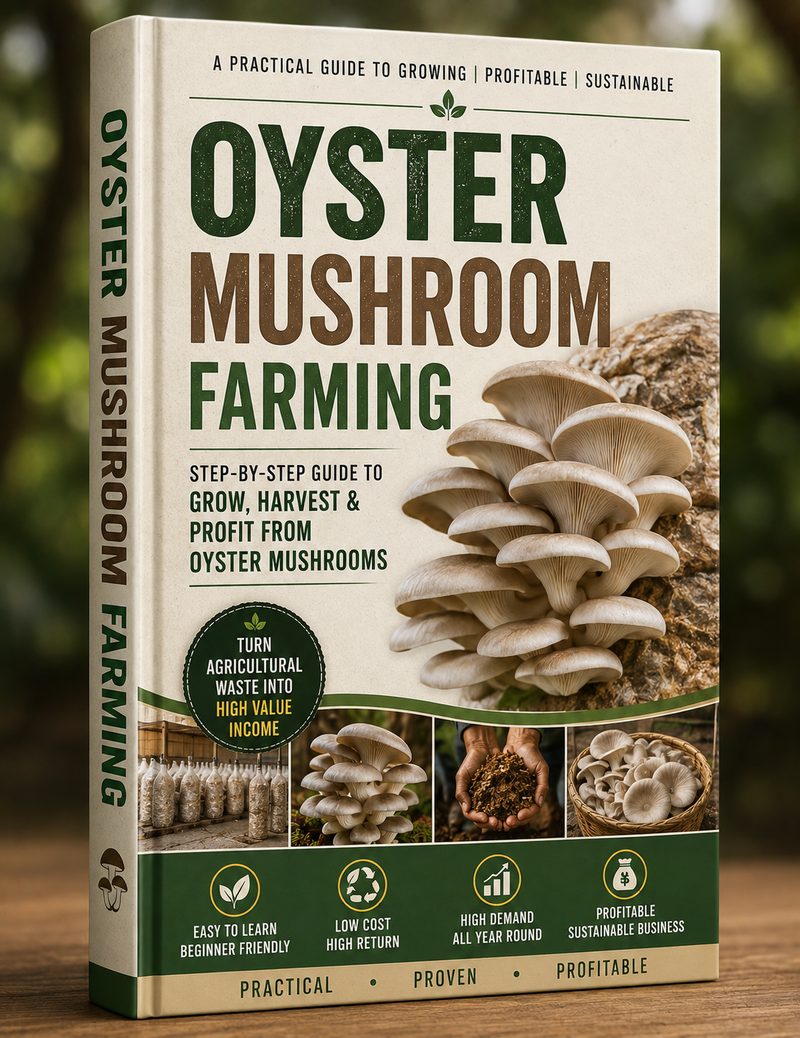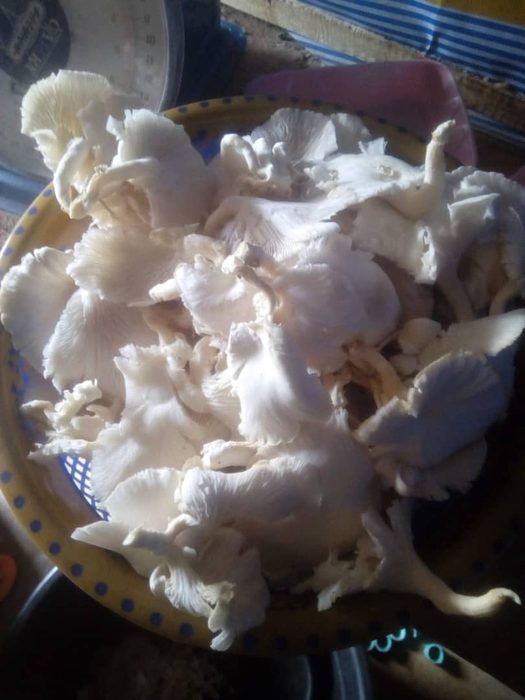
Nigeria produces roughly 300 tonnes of mushrooms per year. The country needs approximately 1,200. That gap — that 900-tonne annual shortfall — is not a problem. It is an opportunity. And for smallholder farmers who understand the production process, oyster mushroom farming is one of the most accessible, fastest-maturing and highest-margin agribusinesses available in Nigeria today.
Why Oyster Mushroom Farming Is Booming in Nigeria and Africa in 2026
The Middle East and Africa oyster mushroom cultivation market was valued at USD 200 million in 2024 and is projected to reach USD 350 million by 2033, growing at a compound annual growth rate of approximately 6.1% (Verified Market Reports, 2026). In Nigeria specifically, market research firm 6Wresearch projects the broader mushroom cultivation market growing at 3.45% annually through 2027, driven by rapidly increasing consumer demand for nutritious, affordable protein alternatives in urban markets.
Fresh oyster mushrooms in Nigeria's major urban markets currently sell at retail between ₦7,280 and ₦10,000 per kilogram depending on the location and season (Within Nigeria, June 2026). For a farmer who understands the production system, this retail price point against a production cost of ₦800–₦1,500 per kilogram represents one of the highest margin opportunities in Nigerian smallholder agriculture.
The supply gap is the most compelling aspect of the market. Nigeria's mushroom consumption is far outstripping domestic production, making this a rare agricultural product category where demand significantly exceeds supply — meaning farmers entering the market are not fighting for market share. The market is waiting for product.
Why Oyster Mushrooms Are the Right Choice for Nigerian Farmers
Of the many mushroom species that can be cultivated commercially, oyster mushrooms (Pleurotus ostreatus) stand out as the practical choice for Nigerian and West African producers for several reasons:
- Tropical tolerance: Oyster mushrooms fruit well at temperatures between 24°C and 32°C — precisely the range of most Nigerian growing environments without the need for expensive climate control systems.
- Substrate versatility: They grow on a wide range of agricultural waste materials — sawdust, rice husk, palm kernel cake, corn cobs, sugarcane bagasse, cotton seed — all of which are abundantly available across Nigeria at low cost.
- Short production cycle: From inoculation to first harvest is typically 21–35 days, with 2–3 additional harvests (flushes) possible from the same substrate bag over the following weeks.
- Market acceptance: Oyster mushrooms are the most widely accepted cultivated mushroom in Nigerian urban markets, restaurants, hotels and supermarkets.
- Low land requirement: A productive mushroom farm operates in a single room or small building — making it one of the most land-efficient agricultural enterprises available.
The Complete Oyster Mushroom Production Process
Successful oyster mushroom farming follows a consistent five-stage process. Understanding each stage — and the critical hygiene and management requirements at each step — is the difference between consistent high yields and contamination losses.
Stage 1 — Substrate Preparation
The substrate is the growing medium that feeds the mushroom — it is the equivalent of soil in crop farming. For oyster mushrooms in Nigeria, the standard substrate is a combination of aged hardwood sawdust (the main carbon source), rice husk (for aeration and drainage), and a nutritional supplement such as palm kernel cake (PKC) or corn flour (to boost protein content and yield).
A standard formula for producing approximately 50 substrate bags (1 kg each) is:
- Sawdust: 20 kg
- Rice husk: 9.5 kg
- PKC or corn flour: 12 kg
- Calcium carbonate (agricultural lime): 1 kg
A critical note on the calcium carbonate: only agricultural lime (calcium carbonate, CaCO3) should be used — never construction lime (hydrated lime or quicklime), which burns skin on contact and kills mushroom mycelium instantly. These materials look similar but have completely different chemical properties. Calcium carbonate is soft, mild and does not burn the skin.
Mix the dry materials thoroughly, then add water gradually while testing moisture content. The correct moisture level is confirmed by the squeeze test: take a handful of mixed substrate and squeeze firmly — if a few drops of water drip, the moisture is correct. If water flows freely, it is too wet. If the handful crumbles, it is too dry.
Stage 2 — Bagging the Substrate
Pack the moistened substrate into heat-resistant polythene bags (1–2 kg per bag), compressing gently without packing too tightly. Tie the mouth of each bag securely with a rubber band. Bags that are too loosely packed will have poor mycelium growth; bags packed too tightly may not allow adequate air exchange during incubation.
Stage 3 — Pasteurization (Sterilization)
Pasteurization kills harmful competing microorganisms — bacteria, moulds and other fungi — that would otherwise compete with the mushroom mycelium and contaminate the bags. It is one of the most critical stages in the entire process. Skipping or inadequate pasteurization is the leading cause of contamination losses among new mushroom farmers.
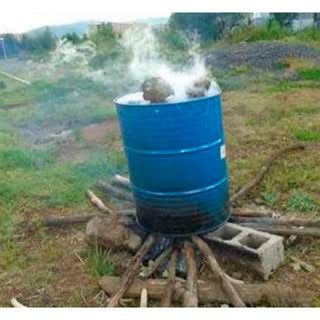
Steam pasteurization of substrate bags using a metal drum over firewood — the most widely used method in Nigerian mushroom farming. Cook for 6 hours (firewood) or 4 hours (gas). Photo: GoOrganicAfrica Research Farm, Nigeria.
The Nigerian small-scale method uses a metal drum on a firewood or gas fire. Substrate bags are placed on a raised wooden or metal platform inside the drum — they must not sit directly in water, as steam (not boiling water) is what pasteurizes the bags. Cooking time is 6 hours with firewood or 4 hours with gas. After cooking, allow bags to cool completely (which may take 10–12 hours) before proceeding to inoculation. Inoculating warm bags kills the spawn.
Stage 4 — Inoculation
Inoculation is the process of introducing mushroom spawn (the mushroom "seed") into the substrate bags. This is the stage most prone to contamination failure if hygiene is not maintained rigorously. The most important rules during inoculation are:
- Do not talk while inoculating — speaking releases saliva droplets that carry contaminating microorganisms.
- Sterilize hands with 80% ethanol before starting, and re-sterilize after every 5–10 bags.
- Work near an ethanol flame — keep the spawn bottle mouth close to the flame when opening to create a sterile airflow barrier.
- Add 2–3 tablespoons of spawn per 1 kg bag, shake gently to distribute, then close and tie immediately.
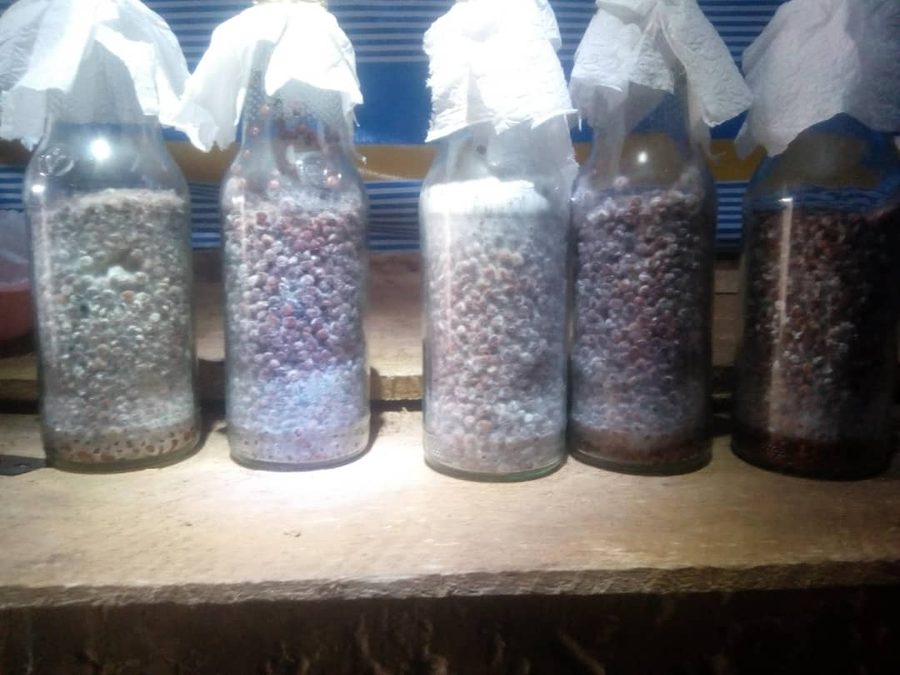
Oyster mushroom spawn in glass bottles at different stages of colonization — from freshly inoculated grain (right) to fully colonized white mycelium (left). Spawn quality is critical to production success. Photo: GoOrganicAfrica Research Farm, Nigeria.
Stage 5 — Incubation
After inoculation, bags are placed in a dark, clean incubation room at 25–30°C. No watering is needed during incubation. Within 10–21 days, white mycelium (the mushroom's root network) should fully colonize the substrate bag, turning the dark sawdust mixture uniformly white.
Contamination must be monitored carefully during this stage. Remove any bag showing green, black or persistent yellow coloration immediately — these indicate contamination by Aspergillus niger, Trichoderma or other competing moulds that can spread to adjacent bags. The only safe response to contamination is immediate removal of the affected bag from the incubation room.
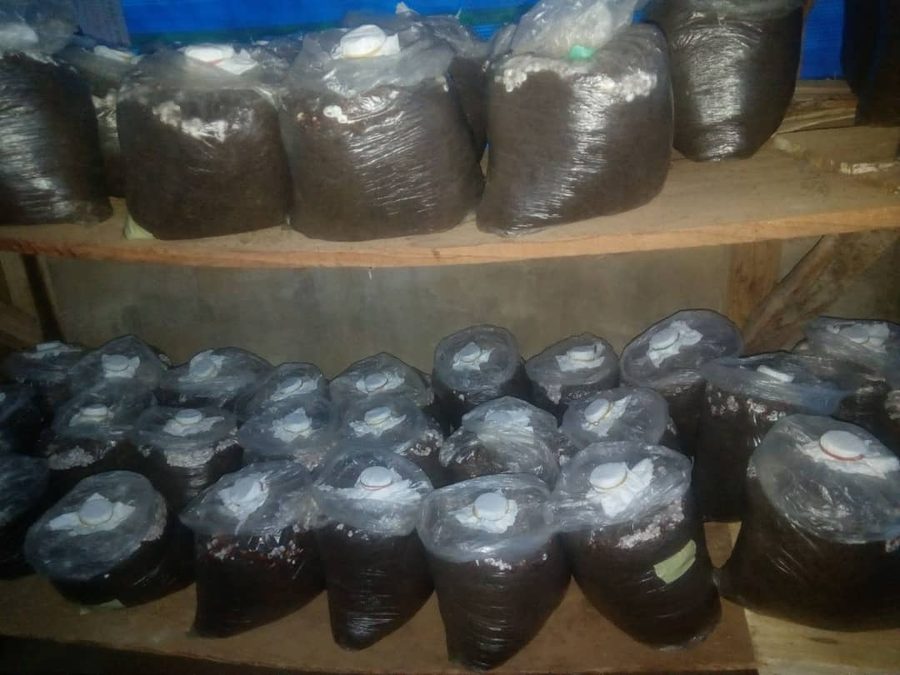
Substrate bags in the incubation room at different stages of mycelium colonization — from newly inoculated dark bags (top) to heavily colonized white bags (bottom). Photo: GoOrganicAfrica Research Farm, Nigeria.
Stage 6 — Fruiting and Harvest
When bags are fully colonized, move them to the fruiting room. Cut small holes in the sides of the bags to allow mushrooms to emerge. Maintain humidity in the fruiting room by spraying water on walls and floor (not directly on mushrooms). Ensure good ventilation and indirect light.
Under good conditions, mushrooms begin to appear within 3–7 days of moving to the fruiting room. Harvest when caps are fully formed and edges slightly curled — twist or cut gently rather than pulling forcefully. A single bag typically yields 3 flushes over 4–6 weeks before the substrate is exhausted. Total yield is typically 600g–1kg of fresh mushrooms per 1 kg substrate bag across all flushes.
The Profitability Picture in 2026
The numbers that experienced Nigerian mushroom farmers quote are striking. According to a detailed account published by Within Nigeria (June 2026), mushroom farmer Chinedu David reported generating ₦1,000,000 from 25 bags of oyster mushrooms. That is a return from a single production batch that most crop farmers would not achieve from a full season's work on a hectare of land. At that scale — 25 bags — the investment in substrate materials, spawn and energy is modest, making the margin-to-investment ratio exceptional compared to most other agricultural enterprises.
Fresh oyster mushrooms sell to hotels, restaurants and urban markets in Lagos, Abuja, Port Harcourt and other major cities at premium prices. Direct supply relationships with restaurants and hotel kitchens — cutting out market middlemen — consistently deliver the best margins.
The African Market Opportunity Beyond Nigeria
Kenya's oyster mushroom industry has been expanding at 25% annually in rural areas according to Kenya's Ministry of Agriculture. Ghana is the leading West African mushroom producer, with market analysis projecting 9.95% annual growth by 2029. South Africa, Rwanda and Cameroon are all experiencing growing formal mushroom markets as urban consumers seek protein-rich, plant-based food options.
For Nigerian farmers with consistent production capability, regional export through aggregators is a realistic medium-term market expansion — particularly as Nigeria's role as the largest cassava and mushroom import market in the region demonstrates the scale of consumption demand relative to domestic production.
Key Takeaways
- Nigeria produces only 300 tonnes of mushrooms annually against an estimated demand of 1,200 tonnes — creating a major market opportunity for new producers.
- Oyster mushrooms are the most practical species for Nigerian farmers due to their tropical temperature tolerance, substrate versatility and market acceptance.
- The complete production cycle from inoculation to first harvest is 21–35 days, with 2–3 additional flushes possible per bag.
- Pasteurization and inoculation hygiene are the two most critical stages — contamination at either point is the leading cause of production failure.
- Fresh oyster mushrooms retail at ₦7,280–₦10,000 per kilogram in Nigerian urban markets, representing exceptional margin potential.
- Infrastructure requirements are minimal — a single room or small building is sufficient to run a profitable small-scale operation.
Frequently Asked Questions
How much does it cost to start oyster mushroom farming in Nigeria?
A small-scale start with 50 bags requires investment in substrate materials (sawdust, rice husk, PKC, calcium carbonate), spawn, heat-resistant bags and basic inoculation equipment (ethanol, cotton wool). Many farmers in Nigeria begin profitably at this scale before expanding, with total startup costs for a 50-bag batch typically ranging from ₦30,000–₦80,000 depending on local material costs.
What is the biggest mistake new mushroom farmers make?
Inadequate pasteurization and poor inoculation hygiene are the two most common causes of failure. Many farmers either cook bags for an insufficient time, or talk/move around too much during inoculation, introducing contamination that destroys the entire batch. Treating hygiene as non-negotiable — not as an inconvenience — is the single most important mindset shift for new producers.
Where do I sell oyster mushrooms in Nigeria?
Urban hotels, restaurants, supermarkets, health food stores and direct-to-consumer online sales through WhatsApp or social media are all established sales channels in Nigeria. Restaurants and hotels are generally the best customers — they need consistent supply, pay premium prices and build long-term supplier relationships. Starting with your immediate network and working outward is the most common path for small producers.
Where can I get the complete step-by-step production guide?
Our Comprehensive Guide to Oyster Mushroom Farming covers the full production process in practical detail — substrate formulas, pasteurization methods, inoculation procedures, contamination identification, fruiting management, harvest timing, scaling from 50 to 1000 bags, and marketing. View the complete guide here.
Further Reading and External Resources
For additional research on mushroom cultivation and markets in Africa:
- FAO: global mushroom production data and food systems research
- IITA: African agricultural research supporting sustainable food production
Conclusion: The Window Is Open — But It Will Not Stay Open Forever
The Nigerian and African oyster mushroom market is in a period of exceptional opportunity — significant and growing demand, very limited local supply, and a production process that is learnable, scalable and achievable with modest startup capital. The farmers who build consistent production systems and market relationships now are positioning themselves for years of strong margins as the overall market develops and competition remains limited.
Mushroom farming rewards those who invest in understanding the process properly from the start. The contamination losses that discourage most beginners are, in the vast majority of cases, preventable with good hygiene and correct technique. The farmers achieving remarkable results from 25–100 bags in Nigeria are not operating secret systems — they have simply mastered the fundamentals of pasteurization, inoculation hygiene and fruiting room management.
Get the Complete Oyster Mushroom Farming Guide
The comprehensive guide covers substrate formulas, pasteurization, inoculation, incubation, fruiting, harvest and scaling — written from real production experience in Nigeria.
Get the Complete Guide