Nigeria produces over 59 million tonnes of cassava annually — the highest of any country in the world. Yet most Nigerian cassava farmers are leaving a significant portion of their potential yield in the ground because of one problem they have never fully solved: weeds. A proven weed-free farming technique is changing that, and it starts with the land — before the first set is planted.
Why Weeds Are the Biggest Yield Killer in Nigerian Cassava Farming
Research is unambiguous on this point: uncontrolled weed growth in cassava reduces yield by up to 80% per hectare. That is not a minor efficiency loss — it is the difference between a profitable season and a complete wipeout of effort and investment. Yet across Nigeria, weeds remain the most underestimated challenge in cassava production.
The problem is structural. Cassava grows slowly in its first 3–4 months after planting. The canopy is sparse, sunlight reaches the soil, and weeds — which grow significantly faster than young cassava plants — quickly establish dominance, competing aggressively for soil nutrients, moisture and light during the very period when cassava roots are forming and determining their ultimate yield potential.
Manual weeding is the traditional response, but it is expensive and increasingly unavailable. Research from the National Agricultural Extension and Research Liaison Service (NAERLS) found that weeding takes between 50% and 80% of the total labour budget of cassava growers in Nigeria, with women contributing approximately 90% of hand-weeding labour. As rural labour shortages grow and labour costs rise, this approach becomes less viable every season.
The Weed-Free Farming Technique: A Different Approach
The weed-free cassava farming technique does not rely on post-emergence hand weeding or repeated herbicide applications as the primary weed control strategy. Instead, it treats weed management as a systems challenge — one that is largely determined before the first cassava set goes into the ground, through thorough, mechanized land preparation combined with strategic planting timing.
The core principle is this: if you prepare the land properly — ploughing deeply enough, harrowing thoroughly, and allowing sufficient time for weed seeds brought to the surface to germinate and die before planting — you dramatically reduce the competitive weed pressure during the critical early establishment period. Combined with correct planting density and cassava variety selection, this approach achieves a weed-free or near-weed-free crop stand through canopy management rather than chemical suppression.
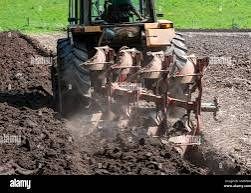
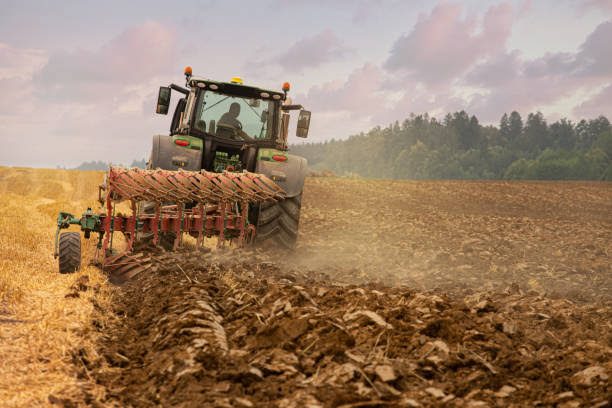
Deep mechanical ploughing inverts the topsoil, burying weed seeds below germination depth and exposing buried weed seeds to desiccation. This single step is the most important intervention in the weed-free technique.
The 5-Month Cassava Production Calendar
Month 0 (Before Planting) — Land Preparation: The Most Critical Stage
Proper land preparation is not a one-pass job. The weed-free technique requires:
First ploughing: Deep mechanical ploughing (minimum 25–30 cm) inverts the soil, burying surface weed seeds below germination depth while bringing deep soil and moisture to the surface. This first ploughing is done 3–4 weeks before planting.
Waiting period: Allow 2–3 weeks after the first plough. Weed seeds brought near the surface by ploughing will germinate rapidly — you want them to emerge and exhaust themselves before cassava planting.
Second harrowing: When the germinated weed seedlings are 2–5 cm tall, harrow the field thoroughly. This uproots the newly germinated weeds and kills them, significantly depleting the surface weed seed bank. The field is now in its most weed-suppressed state — this is when cassava planting begins.
This two-pass approach — plough, wait, harrow — costs more than a single pass but is the single most impactful investment a cassava farmer can make in the entire season, because it addresses weed pressure at its source rather than managing symptoms after they appear.
Month 1 — Planting: Selection and Spacing
Cassava is planted from stem cuttings (sets), not seeds. Set selection is critical:
- Use healthy, disease-free stems from a productive variety. In Nigeria, improved varieties including TME 419, NR 8082 and TMS 30572 are recommended for their high yield, disease resistance and adaptability.
- Cut sets to 25–30 cm length with at least 5–6 nodes for reliable sprouting.
- Plant at 1m × 1m spacing (10,000 plants per hectare) for the weed-free technique. Closer spacing accelerates canopy closure — this is how the crop "shades out" weeds without herbicide once it is established.
- Plant at the correct orientation — sets planted horizontally or at a slight angle establish more uniformly than vertical planting in most Nigerian soil types.
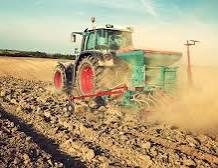
Fertilizer application during land preparation improves soil nutrition and boosts early cassava establishment — a critical step that supports faster canopy development and earlier weed suppression.
Month 2 — Early Establishment: The Critical Window
The first 8 weeks are the most vulnerable period in cassava production. With the weed-free technique, one targeted weeding at 4 weeks (28 days) after planting — before weeds become established and competitive — is typically sufficient to bridge the gap until the cassava canopy begins to close. By week 6–8, a well-established cassava stand at 1m × 1m spacing begins to shade the inter-row spaces, significantly reducing weed growth rates.
Fertilizer application at or around planting time provides the nutritional boost that drives faster early growth and canopy development, accelerating the point at which the crop naturally suppresses weeds.
Month 3–4 — Canopy Closure and Root Formation
By month 3, a well-managed cassava field at the recommended spacing should have a closed or near-closed canopy. This is the point at which the weed-free technique delivers its primary benefit — very little, if any, additional weeding is required because the cassava leaves are blocking sunlight from reaching the soil. Root formation is proceeding rapidly below ground, with the plant channelling its energy into tuber development rather than competition with weeds.
Month 5 — Harvest
While most cassava varieties in Nigeria are typically harvested at 9–12 months, early-maturing improved varieties — particularly when combined with excellent land preparation, correct planting density, adequate fertilisation and weed-free management — can produce commercially viable yields at 5 months, particularly in the humid southern zones of Nigeria. The key indicator of harvest readiness is the swelling of roots to a size where tubers are well-formed and have achieved adequate starch accumulation.
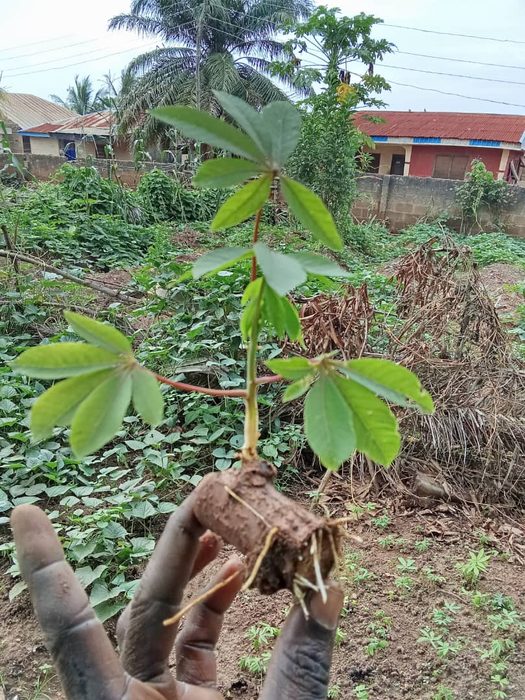
A healthy cassava set sprouting with strong root formation — the result of quality set selection and good soil preparation. Photo: GoOrganicAfrica Research Farm, Nigeria.
Why Mechanization Is Central to the Weed-Free Technique
The weed-free farming technique requires a level of land preparation that is practically impossible to achieve with manual labour alone. Mechanized cassava farming operations in Kogi and Benue States have reported up to 40% higher yields compared to traditional manual farming, driven primarily by the quality of land preparation that mechanization enables. A tractor can plough a hectare to the correct depth in hours — work that would take days of intensive manual labour and rarely achieves the same soil inversion quality.
For farmers who do not own equipment, tractor hire services are available across most Nigerian states. Budgeting for mechanized land preparation is one of the highest-ROI investments a cassava farmer can make in their entire production cycle.
Nigeria's Cassava Industry: The National and Export Opportunity
As the world's largest cassava producer, Nigeria has a significant structural advantage in global cassava markets. However, actual cassava exports remain far below potential — partly because yields per hectare remain low due to poor agronomy, and partly because post-harvest processing capacity is underdeveloped. Farmers who consistently achieve high yields through improved agronomy — including the weed-free technique — are well-positioned to supply the growing number of cassava processors, starch manufacturers and export aggregators operating across Nigeria.
Processed cassava products — garri, cassava flour, fufu, starch and chips — command significantly higher prices than fresh roots. Mechanized farms in Kogi, Benue and Ogun States are already demonstrating what is possible when cassava is treated as a commercial agribusiness rather than a subsistence crop.
Key Takeaways
- Uncontrolled weeds can reduce cassava yield by up to 80% per hectare — making weed management the single most impactful production variable after variety selection.
- The weed-free technique addresses weeds at the source through thorough mechanized land preparation, not reactive manual weeding or repeated herbicide use.
- A two-pass approach — deep ploughing followed by harrowing after weed seedling emergence — depletes the surface weed seed bank before cassava is planted.
- Correct planting density (1m × 1m) accelerates canopy closure, naturally suppressing weeds by month 3–4 without additional intervention.
- Early-maturing improved varieties can produce commercially viable yields at 5 months in Nigeria's humid zones when managed correctly.
- Nigeria produces over 59 million tonnes of cassava annually but has significant untapped yield improvement potential through better agronomy.
Frequently Asked Questions
Do I need to use any herbicide with the weed-free technique?
The weed-free technique is designed to work without herbicides as the primary weed control strategy. Thorough land preparation before planting, combined with one targeted weeding at 4 weeks after planting if needed, typically provides sufficient control in most Nigerian farming environments. Some farmers complement this with a pre-emergence herbicide application immediately after planting in very high-pressure weed situations, but this is not required by the technique.
Can I grow cassava in 5 months in every part of Nigeria?
Five-month harvest is most achievable in Nigeria's southern humid zones where rainfall and temperature are optimal. In drier northern regions or during dry seasons, the vegetative period is typically longer. The variety selected also matters significantly — early-maturing improved varieties are specifically bred for faster development. The complete guide covers variety selection by region in detail.
What is the most important investment in the weed-free technique?
Land preparation — specifically the two-pass plough-and-harrow approach before planting. This single investment in proper mechanized soil preparation does more to determine final cassava yield than any other single input, including fertilizer. Farmers who cut corners on land preparation consistently report the worst weed problems and lowest yields.
Where can I learn the complete production steps in detail?
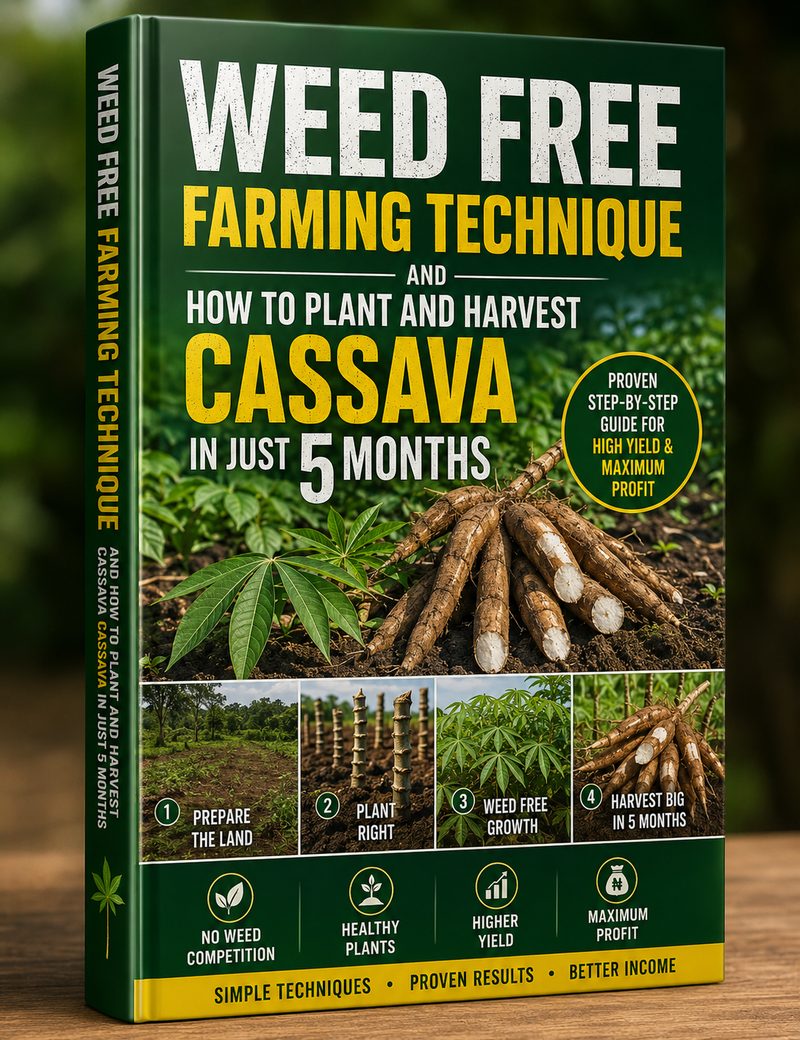
Our Weed-Free Farming Technique guide covers the full 5-month production calendar — from land preparation and set selection through to harvesting — including specific measurements, timing, fertilizer recommendations and troubleshooting. View the complete guide here.
Further Reading and External Resources
For additional research and data on cassava production in Nigeria and Africa:
- IITA Cassava Research Programme: leading research institution on cassava varieties, agronomy and weed management in Africa
- FAO: global cassava production statistics and smallholder farming data
Conclusion: Cassava Farming Is a Business — Treat It Like One
Nigeria's cassava sector has enormous untapped potential. The gap between current average yields and what is technically achievable with improved agronomy is significant, and the weed-free farming technique represents one of the most practical paths to closing that gap for smallholder and commercial farmers alike. It requires investment — in proper land preparation, quality planting material and the right timing — but the returns in higher yield and dramatically reduced weeding labour are well documented.
The farmers achieving consistently high cassava yields in Nigeria are not doing anything magical. They are doing the fundamentals correctly — starting with the soil.
Get the Complete Weed-Free Cassava Farming Guide
The complete step-by-step guide covers land preparation, set selection, planting, canopy management and harvest — everything you need to implement the weed-free technique on your farm.
Get the Complete Guide